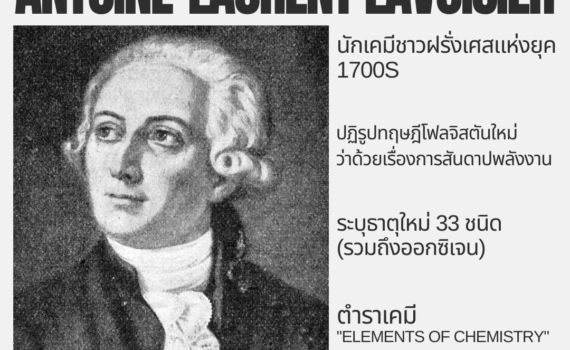
Lavoisier เขียนคู่มือการใช้งานเพื่อจัดระเบียบธาตุต่างๆให้เรียบร้อย เขาเป็นผู้ร่วมเขียนหนังสือ “Elements of Chemistry” ซึ่งกลายเป็นคู่มือแนะนำสำหรับนักเคมีมานานหลายทศวรรษ เป็นคัมภีร์เคมีที่เผยแพร่แนวคิดปฏิวัติของ Lavoisier ไปทั่วโลก
The Father of Chemistry: Antoine-Laurent Lavoisier
When it comes to the vast and ever-evolving field of chemistry, one name stands out as the “father”: Antoine-Laurent Lavoisier. This French scientist, who lived in the 1700s, completely revolutionized the way we understand and practice chemistry, earning him his prestigious nickname.
But what exactly did Lavoisier do to deserve such a title? Let’s take a closer look at his groundbreaking contributions:
Throwing Phlogiston Out the Window:
Back in Lavoisier’s time, scientists believed in a mysterious substance called “phlogiston” that was responsible for burning things. Think of it as a chemical jinn that magically whooshed out of objects when they set ablaze. Lavoisier, the ultimate science party pooper, was like, “Nope, not happening.” He meticulously conducted experiments and proved that combustion actually involved a gas he helped discover and name: oxygen.
The Matter-Saving Discovery:
Lavoisier didn’t stop there. He also unveiled the fundamental law of conservation of mass. This fancy term basically means that in a chemical reaction, the total amount of matter stays the same, no matter how things rearrange. No matter how you mix and match atoms, you can’t create or destroy matter, just shuffle it around. ⚖️
Elemental Makeover:
Chemistry wasn’t exactly organized in the 1700s. Elements, the building blocks of everything, were kind of like a messy attic. Lavoisier cleaned things up. He identified 33 actual elements (including oxygen, of course!), kicked out some imposters that didn’t belong, and even helped create a standardized system for naming them.
Chemistry Textbook for the Ages:
Remember that attic analogy? Well, Lavoisier wrote the instruction manual for tidying it all up. He co-authored the book “Elements of Chemistry,” which became the go-to guide for chemists for decades. It was like the chemistry bible, spreading Lavoisier’s revolutionary ideas far and wide.
As the world continues to evolve, so do the colors that shape our visual landscape. For 2024, the color palette is shifting towards a more vibrant, bold, and lively direction, reflecting a sense of optimism, energy, and hope. Here are some key color trends to watch for:
Viva Magenta: Pantone has declared Viva Magenta, a spirited shade of crimson red, as their Color of the Year for 2024. This bold and electrifying color embodies joy, exuberance, and a sense of pushing boundaries.
Digital Lavender: Digital Lavender, a soft and ethereal shade of purple, evokes a sense of tranquility, creativity, and digital escapism. It’s a color that symbolizes the blurring lines between the physical and digital worlds.
Tranquil Turquoise: Tranquil Turquoise, a serene shade of blue-green, represents balance, harmony, and a connection to nature. It’s a color that promotes a sense of calm and well-being.
Verdant Verdant: Verdant Verdant, a deep and earthy shade of green, symbolizes growth, regeneration, and a connection to the natural world. It’s a color that promotes sustainability and environmental consciousness.
Sunshine Buttercup: Sunshine Buttercup, a radiant and optimistic shade of yellow, represents joy, positivity, and a sense of hope. It’s a color that brings warmth and cheerfulness to any space.
These color trends reflect a desire for more vibrant, expressive, and meaningful colors that resonate with our current times. Embrace these colors to create spaces that inspire, energize, and soothe the soul.
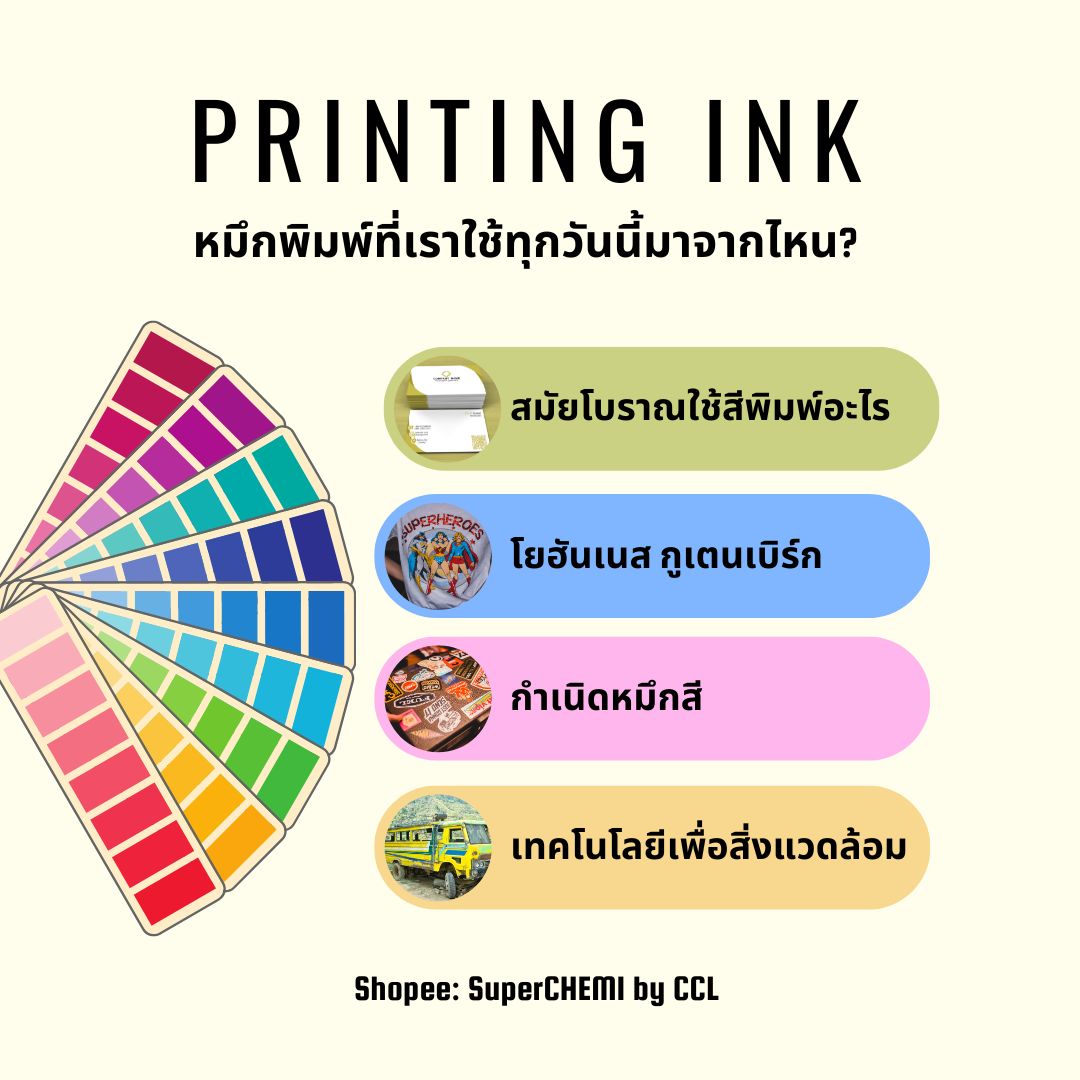
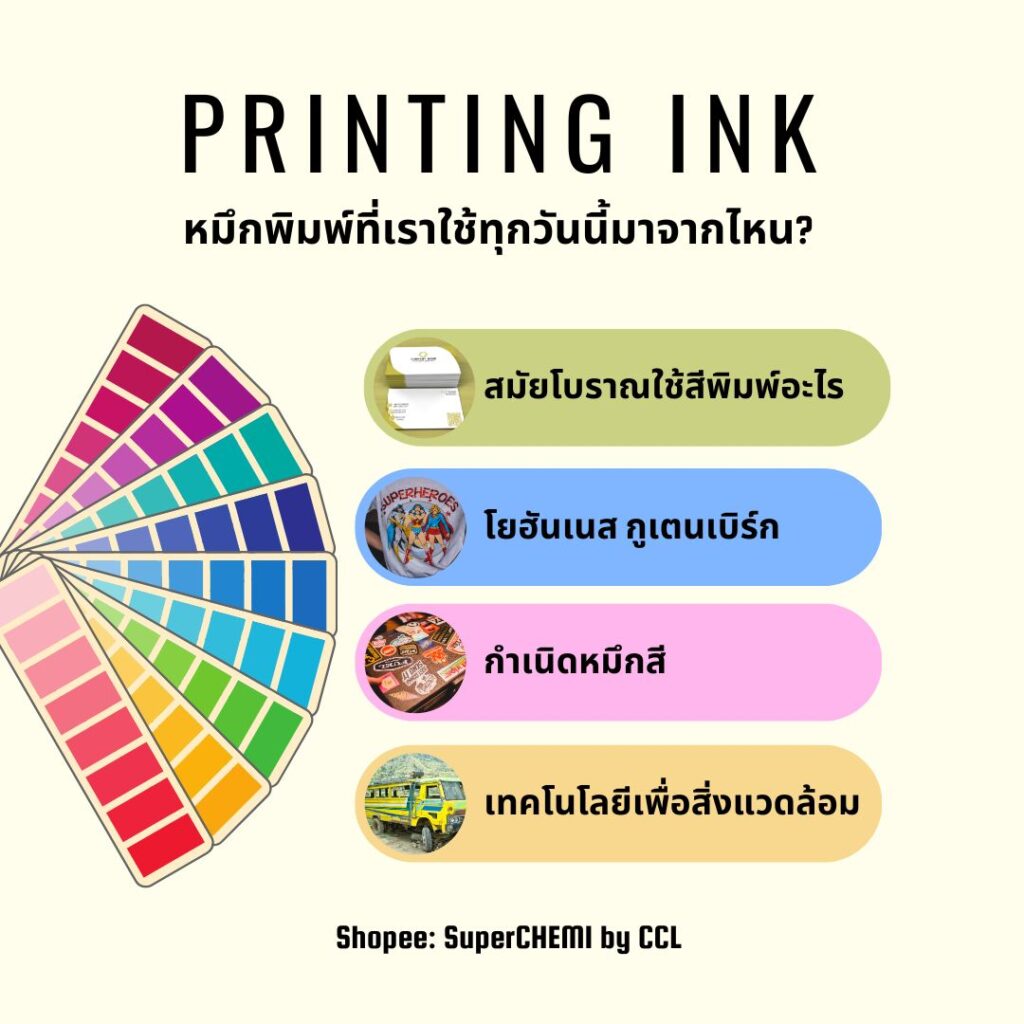
The history of printing ink dates back thousands of years, and its evolution has been closely tied to the development of various printing techniques. Here is a brief overview of the significant milestones in the history of printing ink:
1. **Ancient Times:** The earliest forms of ink were made from natural materials, such as plant extracts, minerals, and animal products. Ancient civilizations, like the Egyptians and Chinese, used these inks for writing and early forms of block printing.
2. **China and Gutenberg’s Invention:** In the 11th century, China advanced ink-making by producing carbon ink from soot and lampblack. Later, in the 15th century, Johannes Gutenberg’s invention of the movable-type printing press revolutionized printing, and oil-based inks were developed for use with metal type.
3. **16th to 18th Centuries:** During the Renaissance, Europe saw significant improvements in ink production. Linseed oil and varnishes were used to create oil-based inks that adhered well to metal and could withstand the pressure of the printing press.
4. **19th Century:** The 19th century witnessed the development of new ink types, including aniline inks, which were derived from coal tar dyes. These inks allowed for a broader range of colors and became popular for color printing.
5. **20th Century:** The invention of offset printing in the early 20th century led to the creation of offset inks, which were specially designed for the offset lithography process. This printing technique became widely used in commercial printing.
6. **Late 20th Century to Present:** Advancements in ink technology continued throughout the late 20th century and into the 21st century. Water-based inks gained popularity due to their eco-friendly properties, and digital printing opened new possibilities with the development of inkjet and laser inks.
7. **Specialty Inks:** Alongside traditional printing inks, specialty inks emerged, such as UV-curable inks, which cure instantly under ultraviolet light, and conductive inks used in printed electronics.
8. **Sustainable Inks:** In recent years, there has been a growing focus on sustainable ink formulations. Manufacturers are developing eco-friendly and bio-based inks, reducing harmful chemical components and environmental impact.
The history of printing ink reflects the continuous innovation and adaptation of ink-making techniques to suit the demands of changing printing technologies and the need for more sustainable solutions in the modern era.
Superplasticizers, also known as high-range water reducers, are chemical admixtures used in concrete and cementitious materials to improve their workability and flowability. They are typically added to concrete mixes to reduce the amount of water required while maintaining the desired consistency and strength.
Superplasticizers work by dispersing cement particles and reducing the attractive forces between them, allowing the particles to move more freely and resulting in improved fluidity. This increased fluidity makes it easier to place and compact the concrete, leading to enhanced workability and reduced segregation and bleeding.
Superplasticizers are commonly used in construction projects where high-strength and high-performance concrete is required, such as in the construction of tall buildings, bridges, and infrastructure projects. By reducing the water content in the concrete mix, superplasticizers contribute to increased strength, improved durability, and reduced permeability of the hardened concrete.
A type of high-performance, environmentally friendly product, Ultraplast® PC10 is a powder-form superplasticizer created by spray-drying modified polycarboxylate superplasticizer. In addition to having a high water reduction rate and good adaptation to different cement brands, Ultraplast® PC10 provides good dispersion properties. Ultraplast® PC10 is particularly well suited for dry-mixed mortar, the creation of wear-resistant flooring, self-leveling flooring, and grouting materials because of its exceptional flow ability.
Refined glycerine, also known as glycerol or glycerin, is a versatile and widely used chemical compound with various applications. Here are some common uses of refined glycerine:
1. Personal Care Products: Refined glycerine is a common ingredient in numerous personal care products such as soaps, lotions, creams, and cosmetics. It acts as a humectant, helping to retain moisture and keep the skin hydrated.
2. Food and Beverage Industry: Refined glycerine is often used in the food and beverage industry as a sweetener, thickener, and preservative. It can be found in products like baked goods, confectionery, beverages, and dairy products.
3. Pharmaceuticals: Glycerine is utilized in the pharmaceutical industry as an ingredient in cough syrups, throat lozenges, and various medications. It helps provide a soothing effect and can act as a solvent for active pharmaceutical ingredients.
4. Industrial Applications: Refined glycerine has industrial applications as well. It is commonly used in the production of chemicals, resins, solvents, and lubricants. It can also serve as a component in antifreeze and as a moisture control agent in tobacco products.