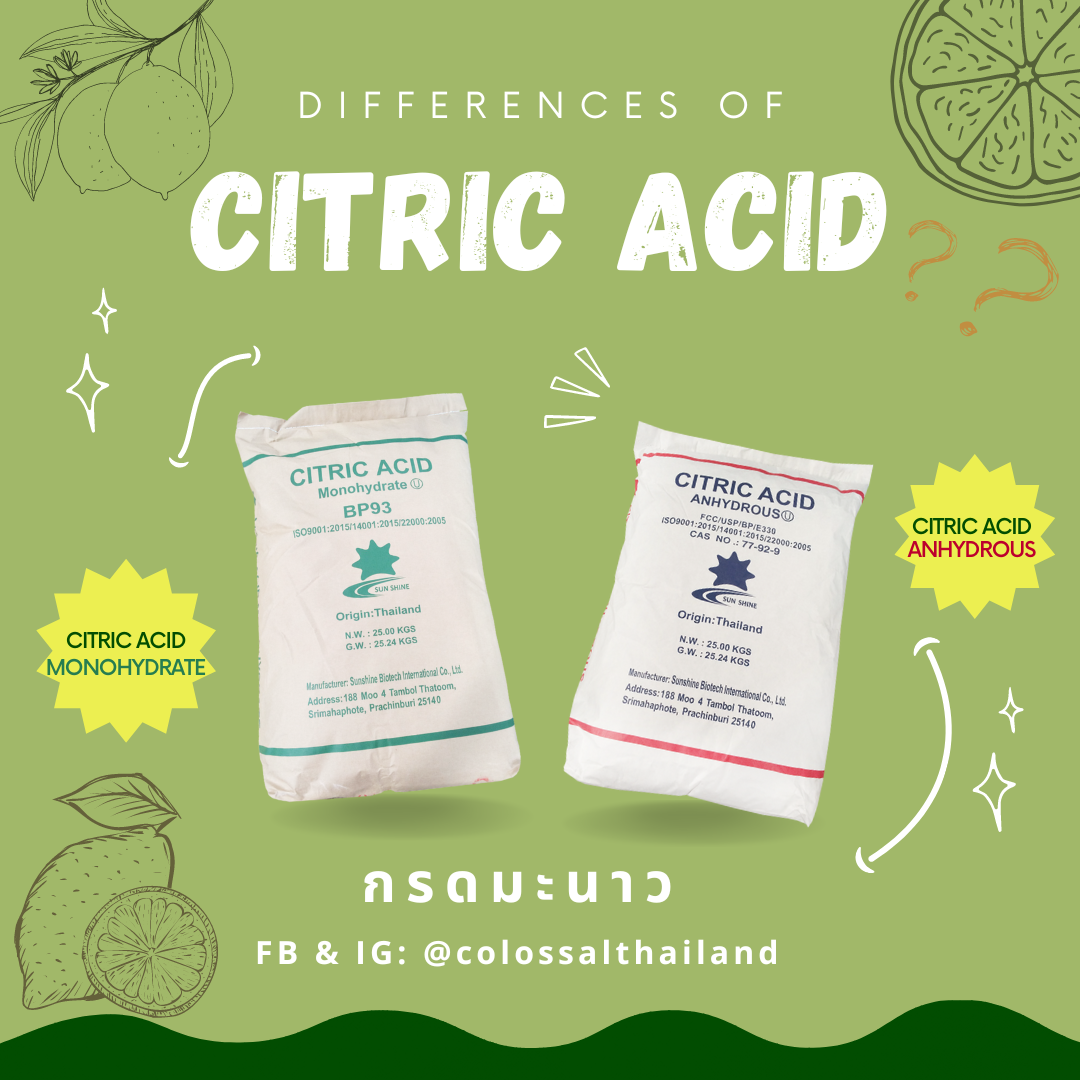
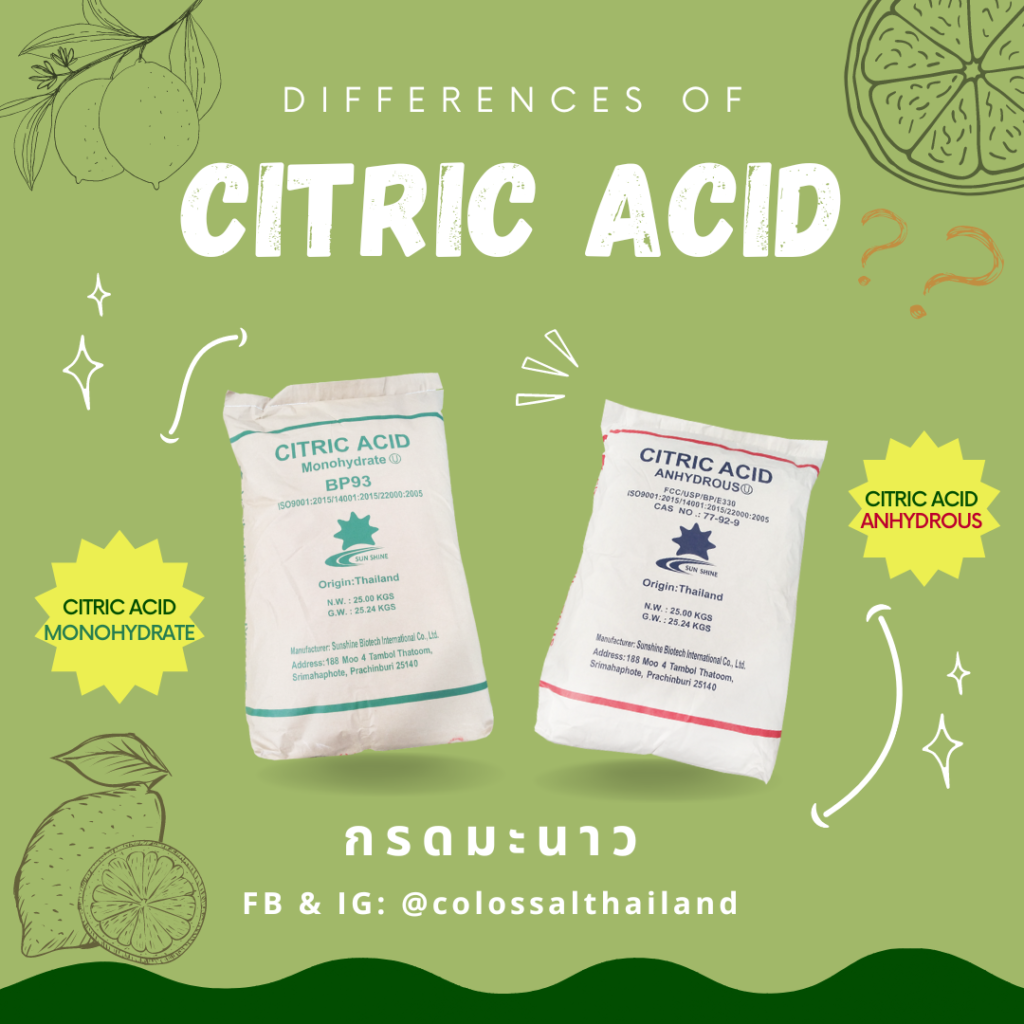
The main difference between Citric Acid Monohydrate and Citric Acid Anhydrous is their water content. Citric Acid Monohydrate contains one molecule of water per molecule of Citric Acid, while citric acid anhydrous does not contain any water molecules.
This difference in water content can affect their physical properties, such as solubility and stability. Citric Acid Monohydrate is more soluble in water than Citric Acid Anhydrous, which means it can dissolve more readily in aqueous solutions. Additionally, Citric Acid Monohydrate is less stable than Citric Acid Anhydrous, which means it can degrade more easily over time.
In terms of applications, Citric Acid Anhydrous is often preferred for use in dry mixes and powdered products, such as drink mixes, because it is more stable and less prone to caking. Citric Acid Monohydrate, on the other hand, is often used in liquid products, such as beverages, because it is more soluble in water.
Overall, the choice between Citric Acid Monohydrate and Citric Acid Anhydrous will depend on the specific application and desired properties of the product. Both forms of Citric Acid have unique advantages and are widely used in various industries.
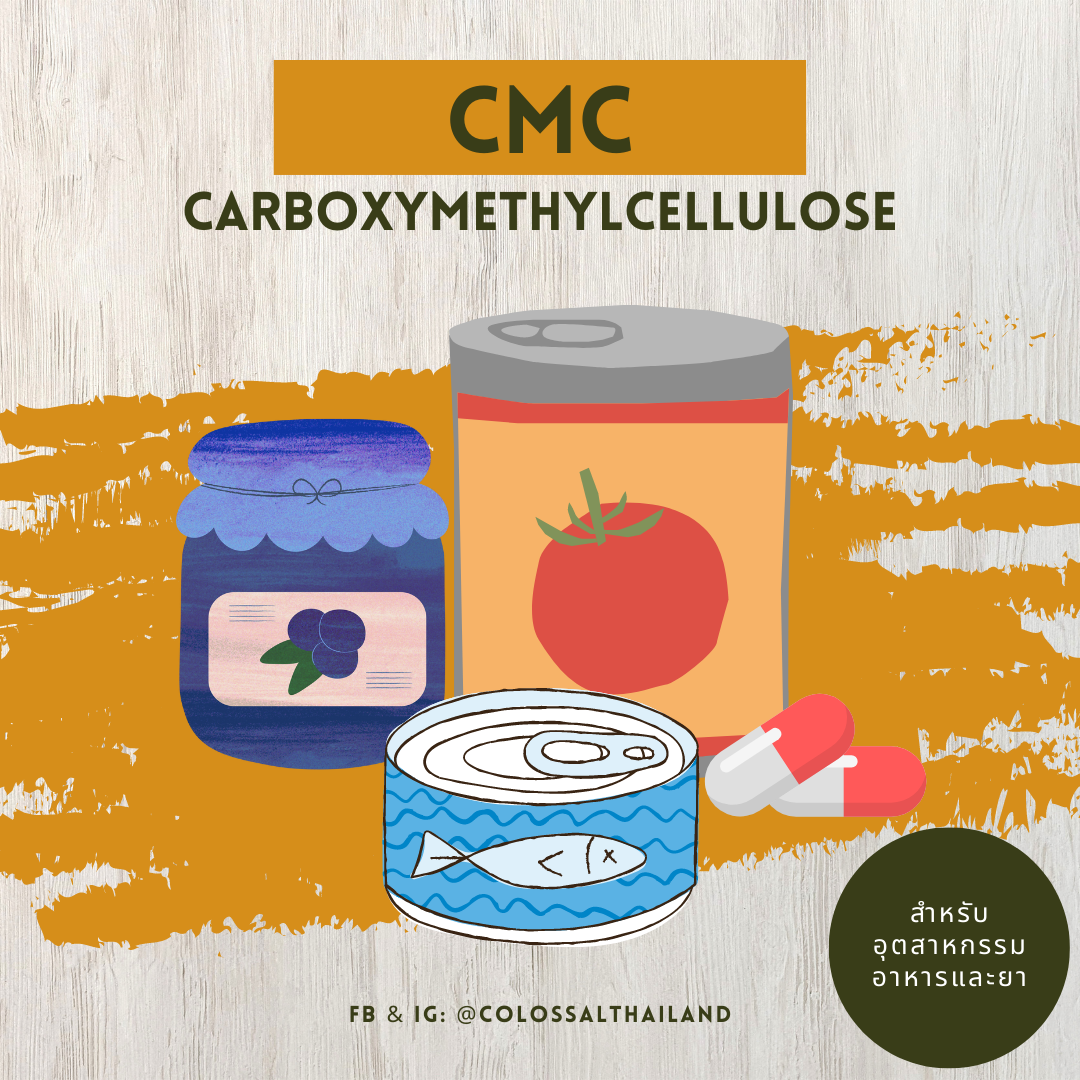
Carboxymethylcellulose (CMC) หรือ คาร์บอกซี่เมทิลเซลลูโลส เป็นโพลิเมอร์ที่ละลายน้ำได้และมีน้ำหนักโมเลกุลสูงเป็นที่นิยมใช้งานอย่างแพร่หลายในอุตสาหกรรมอาหารและยา รวมถึงอุตสาหกรรมอื่นๆอีกมากมาย CMC ถูกสกัดมาด้วยกระบวนการทางเคมีจากเซลลูโลสซึ่งเป็นส่วนประกอบหลักของผนังเซลล์พืช หนึ่งในการใช้งาน CMC ที่แพร่หลายที่สุดคือเป็นสารเพิ่มเนื้อในอาหาร ทำให้เนื้อสัมผัสข้นขึ้น เช่น ไอศกรีม โยเกิร์ตและน้ำสลัด โดย CMC จะช่วยให้เนื้อเนียนขึ้น นอกจากนี้ CMC ยังใช้เป็นสารที่ช่วยให้เครื่องปรุงรสมีมวลสารเข้มข้นขึ้น เป็นส่วนหนึ่งของสารเติมแต่งอาหาร และตัวช่วยในการยึดเกาะของมวลเนื้อสัตว์ในอาหารแปรรูปอีกด้วย CMC ยังเป็นที่นิยมใช้ในอุตสาหกรรมยา ซึ่งเป็นตัวช่วยในการผลิตยา โดยเฉพาะการผลิตยาที่ต้องการความหนาแน่นสูงต้องการการยึดเกาะของตัวยา รวมถึงทำให้ยาประเภทน้ำมีเนื้อที่ข้นหนืดขึ้น นอกจากนี้ CMC ยังใช้เป็นสารหล่อลื่นในยาหยอดตาและทำหน้าที่เป็นชั้นเคลือบสำหรับแคปซูลยาได้อีกด้วย Carboxymethylcellulose (CMC) is a water-soluble, high molecular weight polymer that is commonly used in the food, pharmaceutical, and industrial industries. It is derived from cellulose, which is the main component of plant cell walls, through a chemical modification process. One of the most common uses of CMC is as a thickening agent in food products such as ice cream, yogurt, and salad dressings. It provides a smooth, creamy texture and prevents separation of ingredients. In addition to thickening, CMC is also used as a stabilizer, emulsifier, and binding agent in many processed foods. CMC is also used in the pharmaceutical industry as an excipient, which is a substance added to a medication to improve its physical properties. It is often used as a binder to hold tablets together and as a thickener for liquid medications. CMC is also used as a lubricant in eye drops and as a protective coating for capsules. #CMC #Carboxymethylcellulose #Food #คาร์บอกซีเมทิลเซลลูโลส #Pharmaceutical #ColossalInternational #colossal_thailand #วัตถุดิบคุณภาพ
Calcium chloride food grade refers to a specific grade of calcium chloride that is deemed safe for use as a food additive. It is typically produced and processed in accordance with food safety regulations and guidelines, and it is used in various food and beverage applications.
As a food additive, calcium chloride is generally recognized as safe (GRAS) by the U.S. Food and Drug Administration (FDA) when used in accordance with Good Manufacturing Practices (GMP) and within approved limits. Calcium chloride is commonly used in food and beverage applications for its ability to improve the firmness and texture of fruits and vegetables, act as a calcium source, and extend the shelf life of canned foods.
Some common uses of food grade calcium chloride in the food industry include:
1) Cheese production: Calcium chloride is used in cheese making to promote coagulation and improve the texture and firmness of cheese.
2) Canned fruits and vegetables: Calcium chloride is used as a preservative in canned fruits and vegetables to help maintain their texture and quality during storage.
3) Pickling: Calcium chloride is used in pickling processes to improve the crispness and firmness of pickled fruits and vegetables.
4) Brewing and winemaking: Calcium chloride is sometimes used in brewing and winemaking to adjust water hardness and improve enzyme activity during fermentation.
5) Baking: Calcium chloride may be used in some baking applications to strengthen dough, improve crust quality, and enhance the texture of baked goods.
It’s important to note that the use of calcium chloride, or any food additive, must comply with local regulations and guidelines, and proper dosages and usage levels should be followed to ensure food safety. As with any food ingredient, individuals with specific dietary restrictions or health concerns should consult with a healthcare professional before consuming food products containing calcium chloride or other food additives.
Sodium Metabisulfite (also known as Sodium Metabisulphite) is a white, crystalline powder that is commonly used as a food preservative. In the food industry, it is used to preserve dried fruits, wine, and beer by preventing the growth of harmful bacteria and yeast. It is also used to bleach fruit and vegetables to improve their appearance.
Sodium metabisulfite is a strong reducing agent and releases Sulfur Dioxide gas when dissolved in water. This gas can cause respiratory irritation in some people, so it is important to use caution when handling the substance. Additionally, some individuals may be sensitive to Sulfites and may experience allergic reactions when consuming foods or beverages that contain them.
Potato starch is a type of starch that is derived from potatoes and is used as a thickener, stabilizer, and binder in a variety of food and non-food products. It is a white, tasteless, and odorless powder.
Potato starch is commonly used in food products such as soups, sauces, and baked goods to improve texture and increase viscosity. It is also used as a coating for fried foods to improve crispiness and in gluten-free baking as a substitute for wheat flour. In non-food products, potato starch is used in the production of paper, textiles, and adhesives.
แซคคาริน ถูกสังเคราะห์ขึ้นมาครั้งแรกในสมัยปลายศตวรรษที่ 19 และถูกนำไปใช้อย่างแพร่หลายมานับตั้งแต่นั้น เช่นเดียวกับสารให้ความหวานแทนน้ำตาลประเภทสังเคราะห์ชนิดอื่นๆ ผู้ผลิตและผู้บริโภคควรใช้แซคคารินในปริมาณที่ FDA กำหนดเพื่อความปลอดภัยต่อสุขภาพ
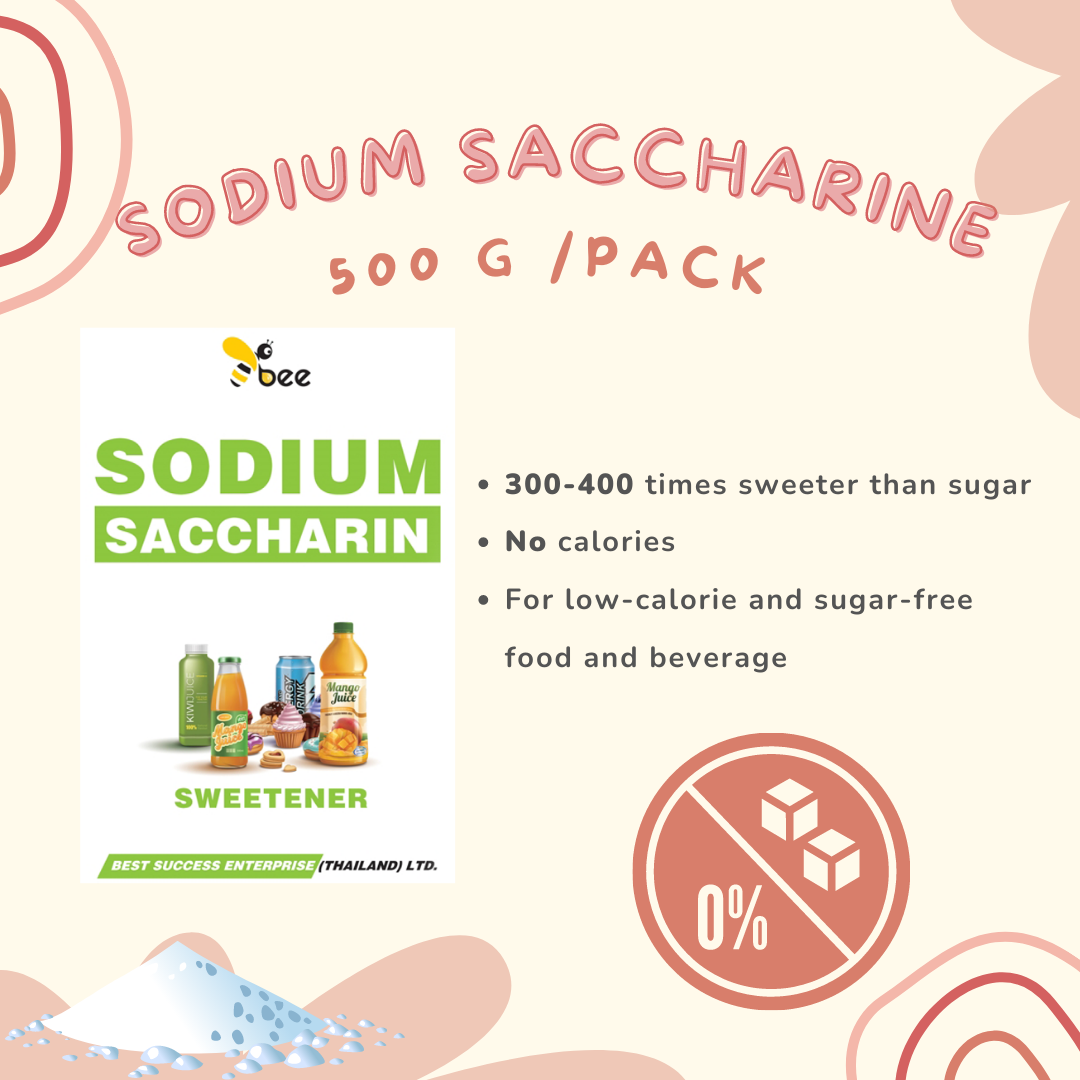
Sodium saccharin is an artificial sweetener that is about 300-400 times sweeter than sugar. It is a non-nutritive sweetener, meaning that it provides no calories or nutritional value, and is often used as a sugar substitute in low-calorie and sugar-free food and beverage products. It was first discovered in the late 19th century and has been widely used as a sweetener for over a century.
Like other artificial sweeteners, sodium saccharin is considered safe for consumption by the FDA and other regulatory agencies. Many experts believe that the levels of saccharin typically consumed by humans are safe.
Sodium benzoate is a food preservative used to extend the shelf life of various food and beverage products by preventing the growth of mold, yeast, and bacteria. It is a white crystalline powder that is soluble in water and is usually used in combination with other preservatives. Sodium Benzoate is a salt of benzoic acid and is commonly used in acidic foods such as soda, pickles, and fruit juice concentrates. It has been approved for use by regulatory agencies such as the FDA, but some studies suggest that it may have potential health effects when consumed in high amounts.