History of Printing Ink (ประวัติความเป็นมาของหมึกพิมพ์)


History of Printing Ink (ประวัติความเป็นมาของหมึกพิมพ์)

Paint & Graphic Arts

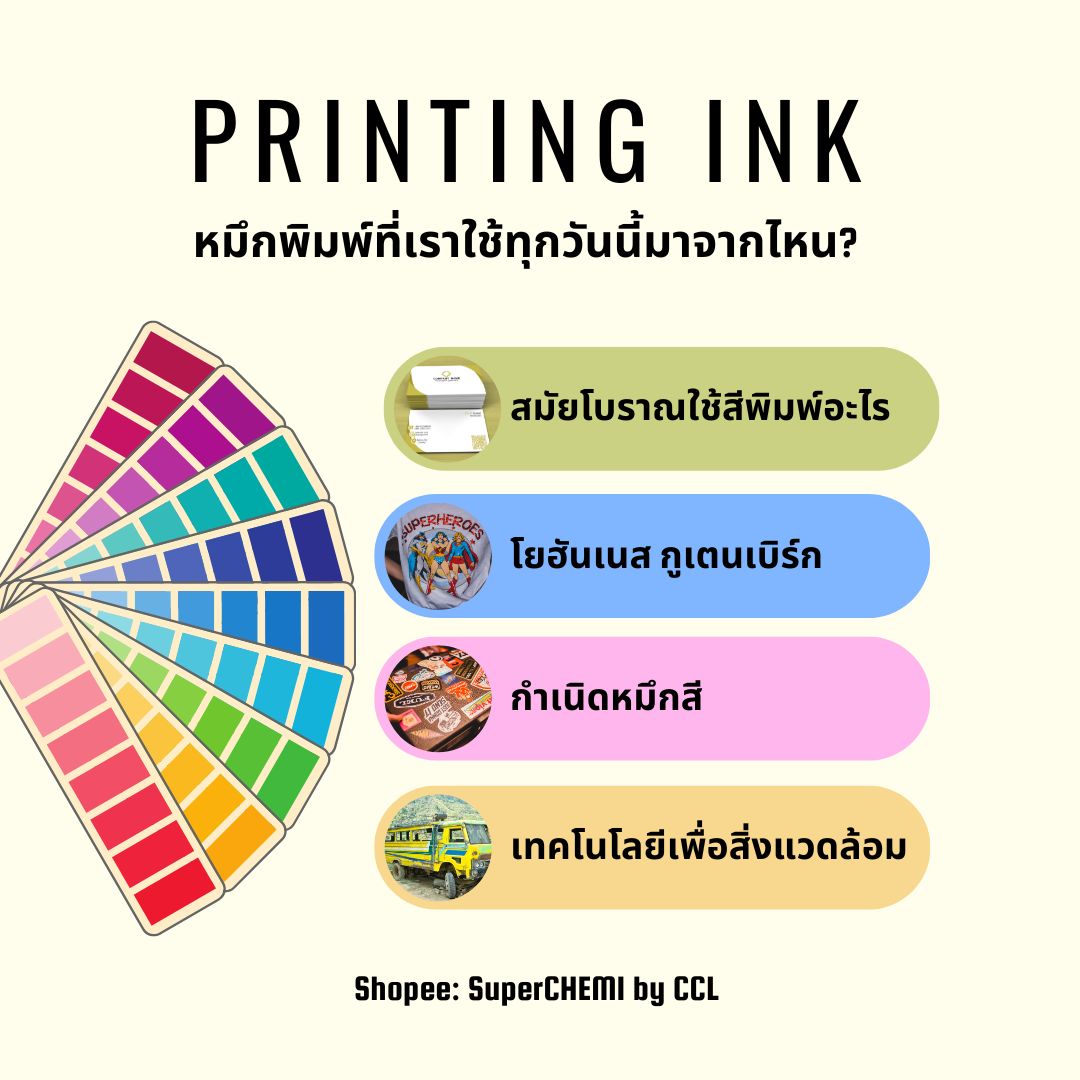
ประวัติของหมึกพิมพ์มีอายุหลายพันปีและเทคโนโลยีของหมึกพิมพ์นั้นเกี่ยวข้องอย่างใกล้ชิดกับการพัฒนาเทคนิคการพิมพ์ตามยุคสมัยต่าง ๆ
 
1. **สมัยโบราณ:** หมึกพิมพ์ยุคแรกถูกสร้างขึ้นมาจากวัสดุธรรมชาติ เช่น สารสกัดจากพืช แร่ธาตุและผลิตภัณฑ์จากสัตว์ สำหรับใช้เขียนและกระบวนการพิมพ์แบบบล็อก
 
2. **ประเทศจีนและการคิดค้นของกูเตนเบิร์ก:** ในศตวรรษที่ 11 ประเทศจีนได้พัฒนาการผลิตหมึกคาร์บอนจากเขม่าตะเกียงไฟ ในช่วงศตวรรษที่ 15 โยฮันเนส กูเตนเบิร์กได้ประดิษฐ์เครื่องพิมพ์พกพาแบบอัตโนมัตินำมาซึ่งการพิมพ์แบบโลหะ และหมึกที่ใช้กับเครื่องพิมพ์แบบนี้เป็นหมึกประเภทใช้น้ำมัน
 
3. **ศตวรรษที่ 16 ถึง 18:** ในระหว่างยุคเรเนซองต์ มีการพัฒนาหมึกพิมพ์ที่ดีขึ้น โดยใช้น้ำมันข้าวฟ่างและสียาง เพื่อให้หมึกพิมพ์เกาะกับโลหะและทนทานต่อแรงกดของเครื่องพิมพ์ได้ดียิ่งขึ้น
 
4. **ศตวรรษที่ 19:** มีการพัฒนาหมึกอะนิลีนซึ่งได้มาจากสารต้านเชื้อราโคลทาร์ไทด์ หมึกพิมพ์ชนิดนี้ช่วยให้สามารถใช้สีที่หลากหลายกว่าและเป็นที่นิยมสำหรับการพิมพ์สีที่ไม่ใช่แบบขาว-ดำ
 
5. **ศตวรรษที่ 20:** การคิดค้นของเครื่องพิมพ์แบบออฟเซทในต้นศตวรรษที่ 20 ทำให้หมึกพิมพ์แบบออฟเซทหรือหมึกออฟเซทถูกสร้างขึ้น หมึกพิมพ์แบบนี้ถูกออกแบบเฉพาะสำหรับกระบวนการพิมพ์ออฟเซทลิโทกราฟีซึ่งที่เป็นที่นิยมในการใช้เชิงพาณิชย์
 
6. **ศตวรรษที่ 20 ถึงปัจจุบัน:** เทคโนโลยีหมึกพิมพ์ยังคงเติบโตต่อเนื่องในศตวรรษที่ 20 เป็นต้นมา หมึกชนิดน้ำกลายเป็นที่นิยมด้วยคุณสมบัติที่เป็นมิตรต่อสิ่งแวดล้อม และหมึกดิจิตอลก็ได้ถูกพัฒนาสืบเนื่องมาจากการพัฒนาระบบพิมพ์แบบ Ink Jet และ Laser
 
7. **หมึกพิมพ์ชนิดพิเศษ:** ตัวอย่างเช่น หมึกพิมพ์ชนิดทนต่อรังสี UV และหมึกพิมพ์สำหรับอิเล็กทรอนิกส์ เป็นต้น
 
8. **หมึกพิมพ์เพื่อสิ่งแวดล้อม:** ผู้ผลิตนิยมพัฒนาหมึกที่มีส่วนประกอบที่เป็นมิตรต่อสิ่งแวดล้อมและส่วนประกอบที่มาจากชีวภาพ ลดสารเคมีอันตรายเพื่อความยั่งยืนของธรรมชาติและสิ่งแวดล้อม
 
The history of printing ink dates back thousands of years, and its evolution has been closely tied to the development of various printing techniques. Here is a brief overview of the significant milestones in the history of printing ink:
 
1. **Ancient Times:** The earliest forms of ink were made from natural materials, such as plant extracts, minerals, and animal products. Ancient civilizations, like the Egyptians and Chinese, used these inks for writing and early forms of block printing.
 
2. **China and Gutenberg’s Invention:** In the 11th century, China advanced ink-making by producing carbon ink from soot and lampblack. Later, in the 15th century, Johannes Gutenberg’s invention of the movable-type printing press revolutionized printing, and oil-based inks were developed for use with metal type.
 
3. **16th to 18th Centuries:** During the Renaissance, Europe saw significant improvements in ink production. Linseed oil and varnishes were used to create oil-based inks that adhered well to metal and could withstand the pressure of the printing press.
 
4. **19th Century:** The 19th century witnessed the development of new ink types, including aniline inks, which were derived from coal tar dyes. These inks allowed for a broader range of colors and became popular for color printing.
 
5. **20th Century:** The invention of offset printing in the early 20th century led to the creation of offset inks, which were specially designed for the offset lithography process. This printing technique became widely used in commercial printing.
 
6. **Late 20th Century to Present:** Advancements in ink technology continued throughout the late 20th century and into the 21st century. Water-based inks gained popularity due to their eco-friendly properties, and digital printing opened new possibilities with the development of inkjet and laser inks.
 
7. **Specialty Inks:** Alongside traditional printing inks, specialty inks emerged, such as UV-curable inks, which cure instantly under ultraviolet light, and conductive inks used in printed electronics.
 
8. **Sustainable Inks:** In recent years, there has been a growing focus on sustainable ink formulations. Manufacturers are developing eco-friendly and bio-based inks, reducing harmful chemical components and environmental impact.
 
The history of printing ink reflects the continuous innovation and adaptation of ink-making techniques to suit the demands of changing printing technologies and the need for more sustainable solutions in the modern era.

Aluminium Paste: ผงอลูมิเนียมกับการใช้งานที่หลากหลาย

Aluminium Paste: ผงอลูมิเนียมกับการใช้งานที่หลากหลาย

Paint & Graphic Arts

Aluminium Paste เป็นผงโลหะละเอียดที่ถูกผลิตจากอลูมิเนียมที่ได้รับการปรับปรุงด้วยสารเคมีพิเศษเพื่อป้องกันการออกซิเดชั่นและเพิ่มเสถียรภาพของอลูมิเนียม Aluminium Paste นี้ใช้กันอย่างกว้างขวางในหลากหลายอุตสาหกรรมเนื่องจากคุณสมบัติและการนำไปใช้งานที่หลากหลาย

หนึ่งในประโยชน์ของ Aluminium Paste คือการใช้งานในอุตสาหกรรมยานยนต์ ที่สามารถนำมาใช้ในการเคลือบและทาสี โดยผสม Aluminium Paste กับส่วนผสมอื่นๆ เช่น เรซินและสารละลาย เพื่อสร้างเคลือบผิวที่มีคุณภาพสูง พัฒนาการยึดเหนี่ยวได้ดี เพิ่มความทนทาน และความต้านทานการกัดกร่อน นอกจากนี้ยังใช้เคลือบในชิ้นส่วนต่างๆของยานยนต์ เช่น ล้อ เครื่องยนต์ และองค์ประกอบอื่นๆ เพื่อป้องกันวัสดุจากปัจจัยทางสิ่งแวดล้อมและเพิ่มความสวยงาม

อีกหนึ่งประโยชน์ที่สำคัญของ Aluminium Paste คือการใช้เป็นวัตถุดิบในอุตสาหกรรมผลิตสารเคลือบต่างๆที่ต้องการการสะท้อนความร้อนออกจากพื้นผิวได้ดี เช่นการผลิตสีทาาบ้าน สำหรับใช้ทาผนัง และหลังคา เพื่อให้สะท้อนแสงแดดและลดการดูดซับความร้อน ซึ่งจะช่วยประหยัดพลังงานและลดค่าใช้จ่ายในการทำความเย็นให้กับอาคารนั้นๆได้

สำหรับอุตสาหกรรมสิ่งพิมพ์ Aluminium Paste ใช้ในการผลิตหมึกพิมพ์ Metallic inks ซึ่งนำไปใช้ได้กับหลากหลายวัสดุ เช่ร กระกาษ พลาสติก และเหล็ก เพื่อสร้างรูปลักษณ์ดีไซน์ที่สวยเงางาม และให้ความสว่างแบบโลหะได้ดีอีกด้วย

นอกจากนี้ Aluminium Paste ยังใช้ในอุตสาหกรรมก่อสร้าง เช่น อิฐมวลเบา อิฐมวลเบาแบบอบไอน้ำ โดยการเพิ่ม Aluminium Paste เข้าไปจะเสริมความคงทนต่อเปลวไฟและเพิ่มประสิทธิภาพการใช้งานโดยภาพรวมได้เป็นอย่างดี

Aluminium Paste: A Versatile Solution for Various Industries

Aluminium paste is a fine, metallic powder made from aluminium flakes that are treated with special chemicals to prevent oxidation and provide stability. This versatile substance is widely used in a variety of industries for its unique properties and applications.

One of the main applications of aluminium paste is in the automotive industry, where it is used for coating and painting. Aluminium paste is mixed with other ingredients, such as resins and solvents, to create high-quality coatings that provide excellent adhesion, durability, and corrosion resistance. These coatings are used in various automotive parts, including wheels, trim, and engine components, to protect them from environmental factors and enhance their appearance.

Another significant use of aluminium paste is in the manufacture of reflective coatings for heat insulation materials. Aluminium paste is added to coatings that are applied to building facades, roofs, and other surfaces to reflect sunlight and reduce heat absorption, thus improving energy efficiency and reducing cooling costs.

In the printing industry, aluminium paste is used in the production of metallic inks. These inks are used for printing on a wide range of materials, including paper, plastic, and metal, to create eye-catching designs and special effects. Aluminium paste provides excellent metallic luster, brightness, and printability, making it an ideal choice for printing applications.

In the construction industry, aluminium paste is used in the production of lightweight concrete and aerated concrete blocks. The addition of aluminium paste improves the stability, insulating properties, and fire resistance of these materials, making them ideal for construction applications.

#ColossalInternational #chemistry #coating #Colossal #paint #Additive #Printing #ECKART #PrintingIndustry


การใช้งานและประโยชน์ของ Titanium Dioxide

การใช้งานและประโยชน์ของ Titanium Dioxide

Paint & Plastics & Rubber

Titanium Dioxide เป็นสารประกอบอินออร์กานิกที่ใช้งานกันอย่างแพร่หลาย มีความสำคัญในการผลิตสี, สารเคลือบ, พลาสติก และเครื่องสำอาง เนื่องจากมีคุณสมบัติที่ดีเยี่ยม เช่น ให้สีขาวสด, ดัชนีการสะท้อนแสงสูง และมีความสามารถในการดูดซับแสง UV ได้ดี

คุณสมบัติของ Titanium Dioxide คือ ความสามารถในการสร้างความหนาแน่นและความคมชัดในการเปลี่ยนสี โดยใช้ปริมาณต่ำ และสามารถใช้งานได้ในการผลิตสี, เครื่องเคลือบ และพลาสติก ที่ต้องการสีสันสดใสและคงทน

อีกคุณสมบัติหนึ่งของ Titanium Dioxide คือความสามารถในการดูดซับแสง UV ทำให้เหมาะสำหรับใช้ในการผลิตผลิตภัณฑ์ดูแลสุขภาพ และผลิตภัณฑ์กันแดด ช่วยปกป้องผิวหนังจากการเสื่อมสภาพของรังสีแสง UV ที่มีอันตรายต่อสุขภาพ

Titanium dioxide is a widely used inorganic compound that is valued for its brilliant white color, high refractive index, and excellent UV absorbing properties. It is used in a variety of applications such as pigments, coatings, plastics, and cosmetics.

One of the key benefits of using titanium dioxide is its ability to provide excellent opacity and coverage, even at low concentrations. This makes it an ideal choice for use in paints and coatings, as well as in plastics and other materials where a bright, consistent color is desired.

Another advantage of titanium dioxide is its ability to absorb UV radiation, which makes it a popular choice for use in sunscreens and other personal care products. In these applications, it helps to protect the skin from the harmful effects of the sun’s rays.
#colossalinternational #Additive #Printing #ColossalInternational #Colossal #coating #graphicart #paint #TitaniumDioxide #tio2


กระบวนการผลิต Titanium Dioxide

กระบวนการผลิต Titanium Dioxide

Paint & Plastics & Rubber

Titanium Dioxide (TiO2; ไทเทเนียม ไดออกไซด์) เป็น ออกไซด์ของแร่ไทเทเนียมธรรมชาติ เป็นที่นิยมใช้ในหลากหลายอุตสาหกรรมเนื่องจากมีคุณสมบัติพิเศษ เช่น ทึบแสง มีค่าดัชนีการหักเหแสงสูง และทนต่อรังสี UV

ไทเทเนียม ไดออกไซด์ มีวิธีการผลิตมาจาก 2 กระบวนการ คือ

1) กระบวนการจากคลอไรด์ (Chloride Process): ในกระบวนการนี้จะใช้ก๊าซคลอรีนและถ่านโค้กมาทำปฏิกิริยากับแร่รูไทล์ (Rutile) และ แร่อิลเมไนต์ (Ilmenite) ในสภาวะที่อุณหภูมิสูงจะทำให้ได้ผลผลิตคือไทเทเนียม เตตระคลอไรด์ (Titanium Tetrachloride; TiCl4) หลังจากนั้นไทเทเนียม เตตระคลอไรด์จะถูกนำไปออกซิไดซ์ (Oxidize) ด้วยก๊าซออกซิเจน ซึ่งจะได้ผลผลิตออกมาเป็นไทเทเนียม ไดออกไซด์บริสุทธิ์

2) กระบวนการจากซัลเฟต (Sulfate Process): ในกระบวนการนี้จะใช้กรดซัลฟิวริกมาทำปฏิกิริยากับแร่อิลเมไนต์เพื่อผลิตสารละลายไทเทเนียม ซัลเฟต หลังจากนั้นสารละลายดังกล่าวจะถูกทำปฏิกิริยา Hydrolysis ซึ่งทำให้ได้ผลผลิตเป็นไทเทเนียม ไดออกไซด์

หลังจากที่ผลิตได้แล้วผู้ผลิตอาจจะนำเข้าสู่กระบวนการอื่นๆเพิ่มเติมเพื่อเพิ่มคุณสมบัติพิเศษขึ้นอยู่กับวัตถุประสงค์การใช้งาน เช่น นำไปเคลือบด้วยสารจำพวกซิลิกาหรืออลูมินา เพื่อเพิ่มความสามารถในการกระจายตัวในของเหลว หรือเพิ่มความทนทานต่อสภาพอากาศเป็นต้น นอกจากนี้อาจจะมีการปรับสภาพพื้นผิวด้วยสารเคมีต่างๆเพื่อปรับคุณสมบัติเพิ่มเติมได้

ด้วยคุณสมบัติค่าดัชนีการหักเหแสงสูง ไทเทเนียม ไดออกไซด์จึงเป็นที่นิยมใช้เป็น pigment สีขาว ในหลายอุตสาหกรรม เช่น อุตสาหกรรมสี วัสดุพื้นผิวที่ต้องการการปกป้อง พลาสติก กระดาษ และเครื่องสำอางค์ โดยมีความทนต่อแสง UV ซึ่งนำไปใช้ในครีมกันแดดได้อีกด้วย

Titanium Dioxide (TiO2) is a naturally occurring oxide of Titanium that is commonly used in various industries due to its unique properties, such as high refractive index, high opacity, and UV resistance.

There are two main methods for producing Titanium Dioxide:

1. Chloride Process: In this process, high-quality rutile or ilmenite ores are treated with chlorine gas and coke at high temperatures to produce Titanium Tetrachloride (TiCl4). The TiCl4 is then oxidized with oxygen to produce pure TiO2.

2. Sulfate Process: In this process, ilmenite ores are digested with Sulfuric acid to produce a Titanium Sulfate solution. The solution is then hydrolyzed to precipitate TiO2.

After production, TiO2 can be further processed to improve its properties for specific applications. For example, it can be coated with materials such as silica or alumina to improve its dispersibility in liquids or to enhance its resistance to weathering. It can also be surface-treated with various chemicals to modify its surface properties.

TiO2 is commonly used in a wide range of applications, including paint, coatings, plastics, paper, and cosmetics. Its high refractive index makes it a popular choice for white pigments, and its UV resistance makes it useful for sunscreens and other protective coatings.

#colossalinternational #Additive #Printing #ColossalInternational #Colossal #coating #graphicart #paint #TitaniumDioxide #tio2