FB IG CONTENT - Ammonium Sulfate (แอมโมเนียมซัลเฟต)

Ammonium Sulfate (แอมโมเนียมซัลเฟต)


Ammonium Sulfate (แอมโมเนียมซัลเฟต)

Pharmaceuticals

FB IG CONTENT - Ammonium Sulfate (แอมโมเนียมซัลเฟต)
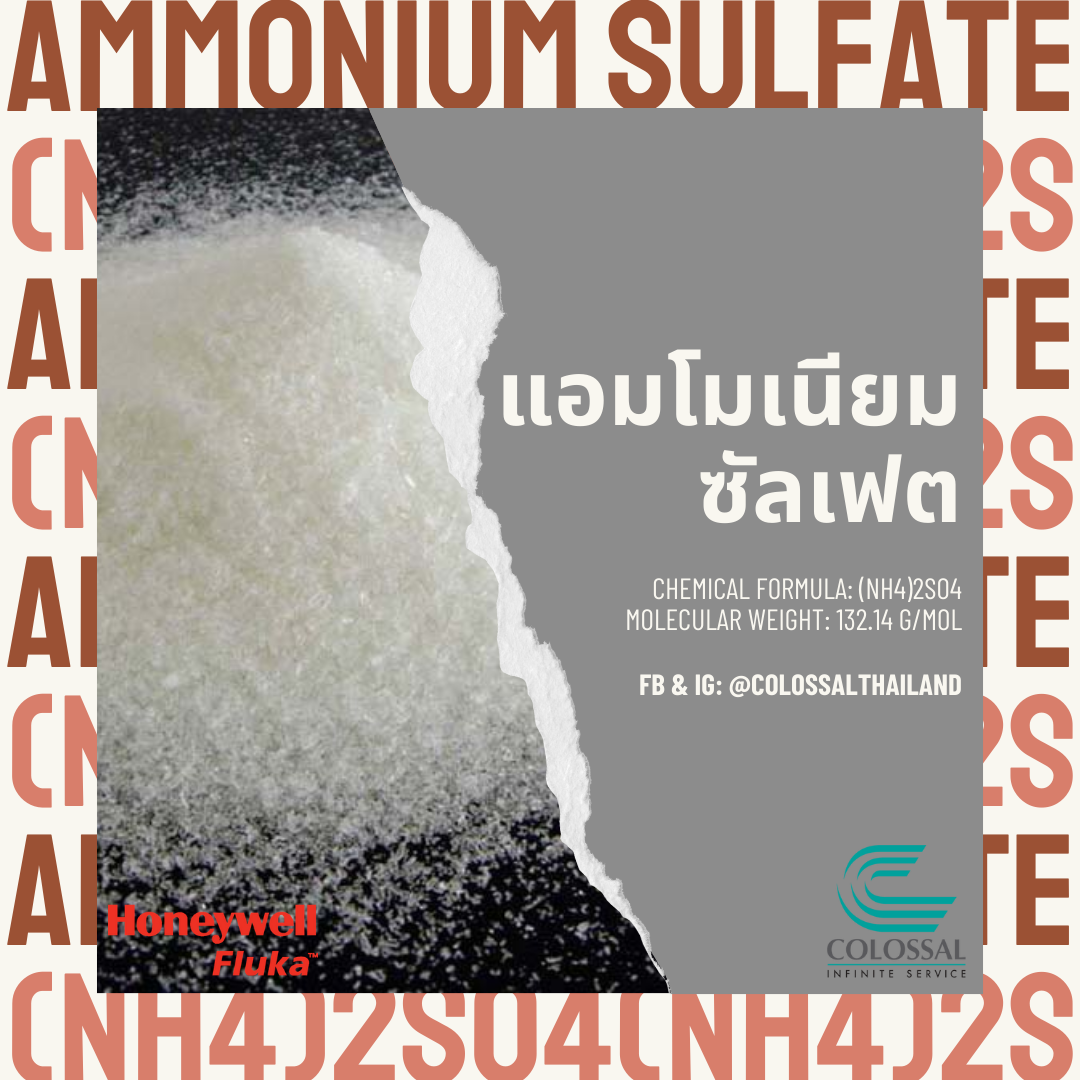
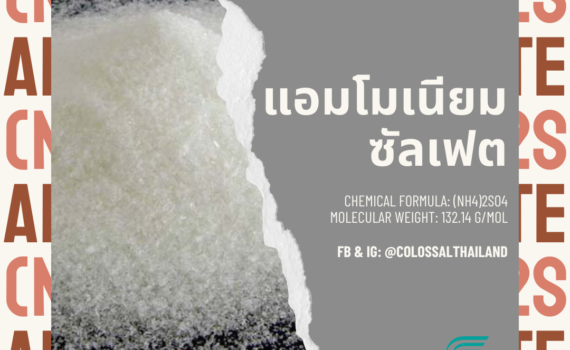
แอมโมเนียมซัลเฟต (Ammonium Sulfate) หรือที่รู้จักกันอีกชื่อหนึ่งว่าไดแอมโมเนียมซัลเฟต เป็นสารประกอบอนินทรีย์ที่มีสูตรเคมี (NH4)2SO4 ซึ่งมีการใช้งานทั่วไปเป็นปุ๋ยเคมี และใช้ในงานอุตสาหกรรมต่างๆ
 
1) สูตรเคมี: (NH4)2SO4
2) น้ำหนักโมเลกุล: 132.14 กรัม/โมล
3) ลักษณะ: เป็นผลึกสีขาวแข็งไม่มีกลิ่น
4) ความละลาย: ละลายได้ดีในน้ำ
5) ปุ๋ยเคมี: แอมโมเนียมซัลเฟตเป็นปุ๋ยที่ใช้กันอย่างแพร่หลายสำหรับปุ๋ยประเภทไนโตรเจน เหมาะสำหรับพืชที่ต้องการกำมะถันสูง เช่น ผักกาด ข้าวโพด และข้าวสาลี
6) ใช้ควบคุมค่า pH: แอมโมเนียมซัลเฟตสามารถใช้ปรับค่า pH ในดินหรือน้ำได้ มักใช้ในดินที่เป็นด่างเพื่อเพิ่มความเป็นกรด และสร้างสภาพแวดล้อมที่เหมาะสมสำหรับพืชบางชนิด
7) การใช้งานในอุตสาหกรรม: แอมโมเนียมซัลเฟต ใช้ในกระบวนการผลิตเส้นใยสังเคราะห์ สีย้อม ยา รวมถึงเป็นองค์ประกอบในสารดับเพลิง
8) วัตถุเจือปนอาหาร: แอมโมเนียมซัลเฟต ยังสามารถใช้เป็นวัตถุเจือปนอาหารซึ่งได้รับการรับรองเป็นมาตรฐาน ผลิตภัณฑ์อาหารที่นิยมใช้แอมโมเนียมซัลเฟตคือผลิตภัณฑ์จำพวกแป้งและเบเกอรี่ต่างๆ
9) การใช้ในห้องแลปปฏิบัติการ: แอมโมเนียมซัลเฟต สามารถใช้ในกระบวนการแยกโปรตีนให้บริสุทธิ์และทำให้เกิดการตกผลึก โดยคุณสมบัติที่ละลายในน้ำได้ดีทำให้แอมโมเนียมซัลเฟตสร้างพันธะไฮโดรเจนกับโปรตีนและตกตะกอนเป็นผลึกได้ง่าย
10) ข้อควรระวัง: ควรใช้แอมโมเนียมซัลเฟตในปริมาณที่เหมาะสมกับการใช้งานแต่ละประเภท หากใช้ในปริมาณที่มากเกินไปหรือใช้ผิดวิธี อาจจะทำให้เกิดอาการระคายเคืองต่อผิวหนัง ตา และระบบทางเดินหายใจได้
 
Ammonium Sulfate, also known as Diammonium Sulfate is an inorganic compound with the formula (NH4)2SO4. It is commonly used as a fertilizer and in various industrial applications.
Here are some key points about it:
 
1. Chemical formula: (NH4)2SO4
2. Molecular weight: 132.14 g/mol
3. Appearance: A white crystalline solid with no odor
4. Solubility: Highly soluble in water
5. Fertilizer: It is a popular nitrogen-based fertilizer providing plants with both nitrogen and sulfur, which are essential nutrients for their growth. It is often used for crops that require high levels of sulfur, such as brassicas (cabbage, broccoli, etc.), corn, and wheat.
6. pH control: It can be used to lower the pH of soil or water. It is often applied to alkaline soils to make them more acidic, thus creating a favorable environment for certain plants.
7. Industrial applications: It is commonly used in the production of textiles, dyes, pharmaceuticals, and fire extinguisher compounds.
8. Food additive: Ammonium Sulfate is listed as an approved food additive (E number E517) in the European Union. It is used as a dough conditioner in bread-making and as a stabilizer for certain food products.
9. Laboratory use: Ammonium Sulfate is commonly used in laboratory settings for protein purification and crystallization. It helps in precipitating proteins from solution due to its high solubility in water and ability to form hydrogen bonds with proteins.
10. Safety precautions: It is generally considered safe when used appropriately. However, it can be irritating to the eyes, skin, and respiratory system. It is important to handle it with care and follow safety guidelines when using or storing it.
 
#ColossalInternational #chemistry #วัตถุดิบคุณภาพ #AmmoniumSulfate #แอมโมเนียมซัลเฟต

FB IG CONTENT - Differences of Citric Acid (Citric Acid Monohydrate & Citric Acid Anhydrous)

Differences of Citric Acid (Citric Acid Monohydrate & Citric Acid Anhydrous)


Differences of Citric Acid

Food & Basic Chemical

FB IG CONTENT - Differences of Citric Acid (Citric Acid Monohydrate & Citric Acid Anhydrous)

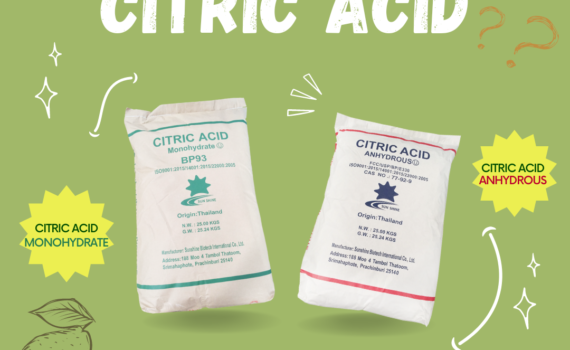
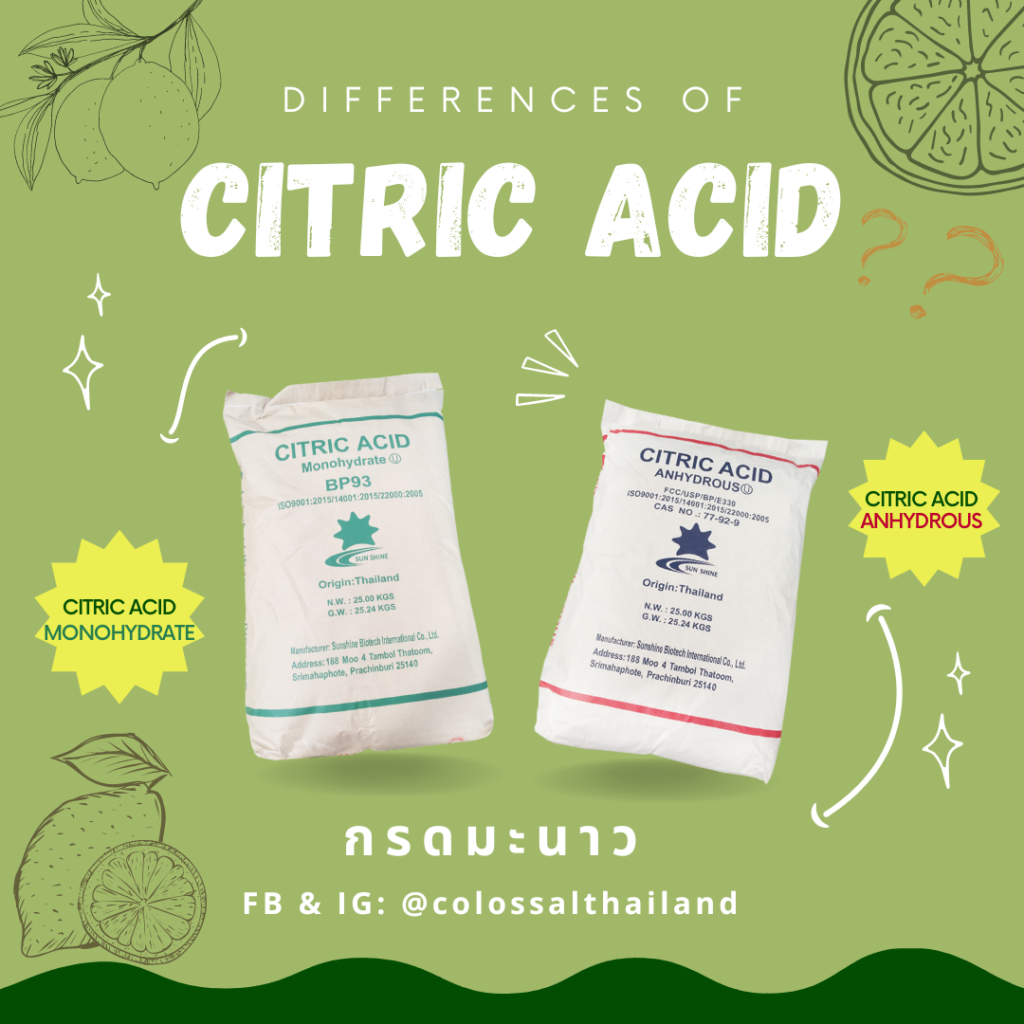
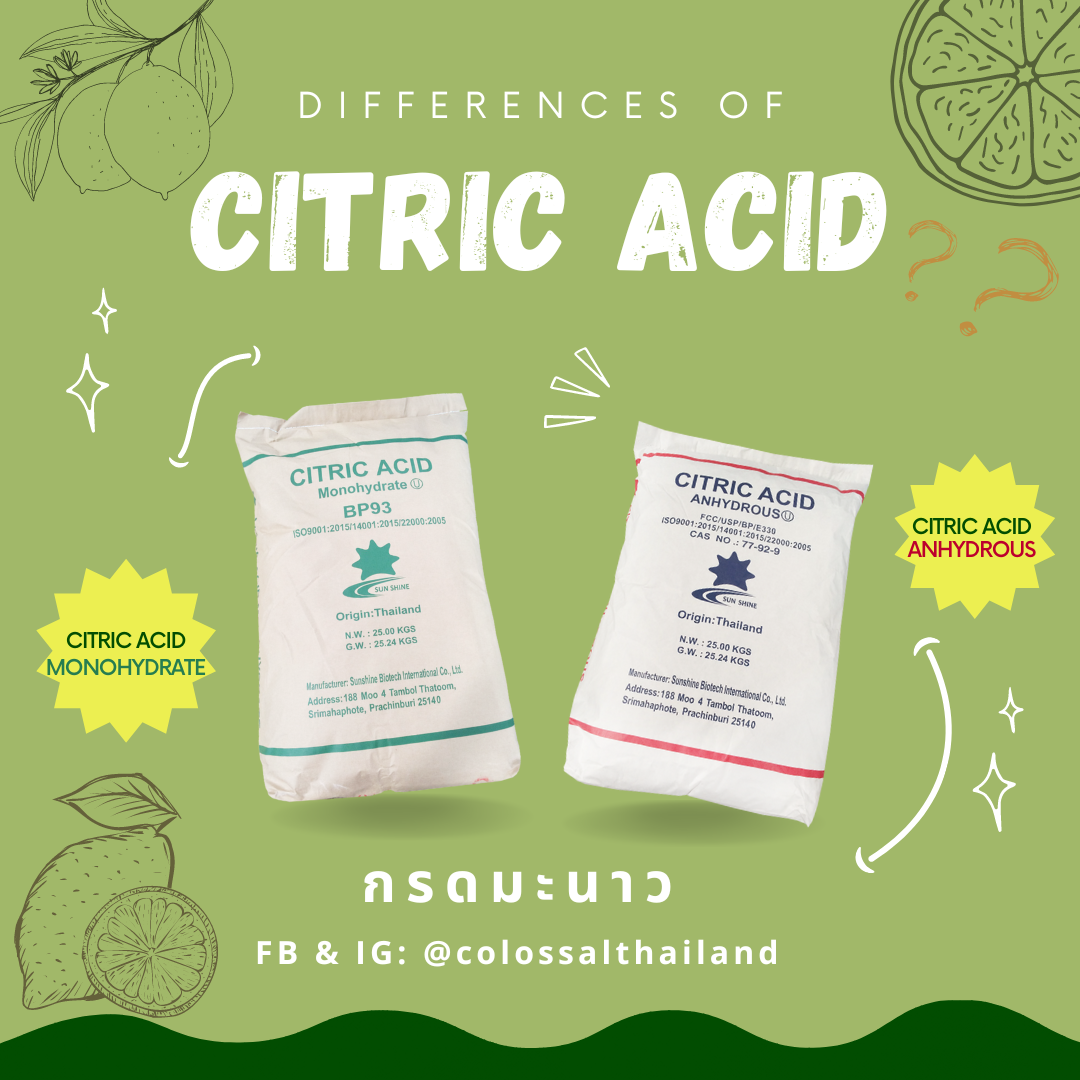
ความแตกต่างระหว่าง Citric Acid Monohydrate และ Citric Acid Anhydrous (กรดมะนาว) คือ องค์ประกอบของน้ำในโมเลกุล โดย Citric Acid Monohydrate จะประกอบไปด้วยโมเลกุลของน้ำ 1 โมเลกุล ต่อ หน่วยโมเลกุลของ Citric Acid Monohydrate ในขณะที่ Citric Acid Anhydrous ไม่มีองค์ประกอบของน้ำอยู่ในโมเลกุลเลย

เนื่องจากปัจจัยที่มีน้ำอยู่ในโมเลกุลทำให้คุณสมบัติในการนำไปใช้งานแตกต่างกันทั้งในเรื่องของความสามารถในการทำละลาย และความคงสภาพของกรดมะนาว โดย Citric Acid Monohydrate จะมีความสามารถในการละลายน้ำได้ดีกว่า ซึ่งหมายถึงสามารถทำละลายในสารละลายอื่นๆได้ง่ายกว่าอีกด้วย ในทางกลับกัน ความคงสภาพของ Citric Acid Monohydrate จะน้อยกว่าด้วย เนื่องจากมีความสามารถในการแตกตัวและทำละลายได้ดีกว่านั่นเอง

สำหรับการใช้งาน Citric Acid Anhydrous เป็นที่นิยมใช้เป็นส่วนผสมของผลิตภัณฑ์ที่มีลักษณะแห้ง และเป็นผง เช่น เครื่องดื่มผงสำหรับชงดื่มเนื่องจากมีคุณสมบัติในการคงสภาพดีกว่าและลดโอกาสในการทำให้ผลิตภัณฑ์จับตัวเป็นก้อน ในขณะที่ Citric Acid Monohydrate จะเป็นที่นิยมใช้ในผลิตภัณฑ์ของเหลว เช่น เครื่องดื่มสำเร็จรูป เนื่องจากคุณสมบัติที่ละลายได้ดีกว่านั่นเอง

Citric Acid หรือกรดมะนาวทั้ง 2 ชนิดนี้สามารถนำไปใช้ได้หลากหลายอุตสาหกรรม ซึ่งการเลือกใช้งานระหว่าง Citric Acid Monohydrate และ Citric Acid Anhydrous นั้นขึ้นอยู่กับลักษณะการใช้งานและคุณสมบัติของผลิตภัณฑ์ที่ต้องการ

The main difference between Citric Acid Monohydrate and Citric Acid Anhydrous is their water content. Citric Acid Monohydrate contains one molecule of water per molecule of Citric Acid, while citric acid anhydrous does not contain any water molecules.


This difference in water content can affect their physical properties, such as solubility and stability. Citric Acid Monohydrate is more soluble in water than Citric Acid Anhydrous, which means it can dissolve more readily in aqueous solutions. Additionally, Citric Acid Monohydrate is less stable than Citric Acid Anhydrous, which means it can degrade more easily over time.


In terms of applications, Citric Acid Anhydrous is often preferred for use in dry mixes and powdered products, such as drink mixes, because it is more stable and less prone to caking. Citric Acid Monohydrate, on the other hand, is often used in liquid products, such as beverages, because it is more soluble in water.


Overall, the choice between Citric Acid Monohydrate and Citric Acid Anhydrous will depend on the specific application and desired properties of the product. Both forms of Citric Acid have unique advantages and are widely used in various industries.

#กรดมะนาว #CitricAcid #CitricAcidMonohydrate #CitricAcidAnhydrous #วัตถุดิบคุณภาพ #ColossalInternational #colossal_thailand #Food #shopee


FB IG CONTENT - Sodium Metabisulfite (โซเดียม เมตาไบซัลไฟต์)

Sodium Metabisulfite (โซเดียม เมตาไบซัลไฟต์)

Sodium Metabisulfite (โซเดียม เมตาไบซัลไฟต์)

Food & Basic Chemical

FB IG CONTENT - Sodium Metabisulfite (โซเดียม เมตาไบซัลไฟต์)

Sodium Metabisulfite (โซเดียม เมตาไบซัลไฟต์) มีลักษณะเป็นผลึกผงสีขาวที่นิยมใช้เป็นวัตถุกันเสียฉและ Anti-Oxidant ในอาหาร เช่น ในอุตสาหกรรมผลไม้แห้ง และใช้เป็นสารยับยั้งการเจริญเติบโตของแบคทีเรียและยีสต์ที่ไม่พึงประสงค์ในอุตสาหกรรมการผลิตไวน์และเบียร์ อีกทั้งยังมีส่วนช่วยให้คงสภาพสีของผักและผลไม้อีกด้วย

เมื่อละลายโซเดียม เมตาไบซัลไฟต์ในน้ำเปล่า จะทำปฏิกิริยาและปล่อยก๊าซซัลเฟอร์ ไดออกไซด์ ซึ่งมีผลทำให้ระคายเคืองระบบทางเดินหายใจได้ในบางคนที่มีความไวต่อก๊าซเหล่านี้ ดังนั้นจึงต้องมีความระมัดระวังในการใช้งานโซเดียม เมตาไบซัลไฟต์ให้เหมาะสมกับประเภทของอาหารนั้นๆเพื่อป้องกันอาการไม่พึงประสงค์จากอาการแพ้ซัลไฟต์

Sodium Metabisulfite (also known as Sodium Metabisulphite) is a white, crystalline powder that is commonly used as a food preservative. In the food industry, it is used to preserve dried fruits, wine, and beer by preventing the growth of harmful bacteria and yeast. It is also used to bleach fruit and vegetables to improve their appearance.

Sodium metabisulfite is a strong reducing agent and releases Sulfur Dioxide gas when dissolved in water. This gas can cause respiratory irritation in some people, so it is important to use caution when handling the substance. Additionally, some individuals may be sensitive to Sulfites and may experience allergic reactions when consuming foods or beverages that contain them.
#SodiumMetabisulfite #โซเดียมเมตาไบซัลไฟต์ #colossalinternational