บิดาแห่งเคมี: Antoine-Laurent Lavoisier
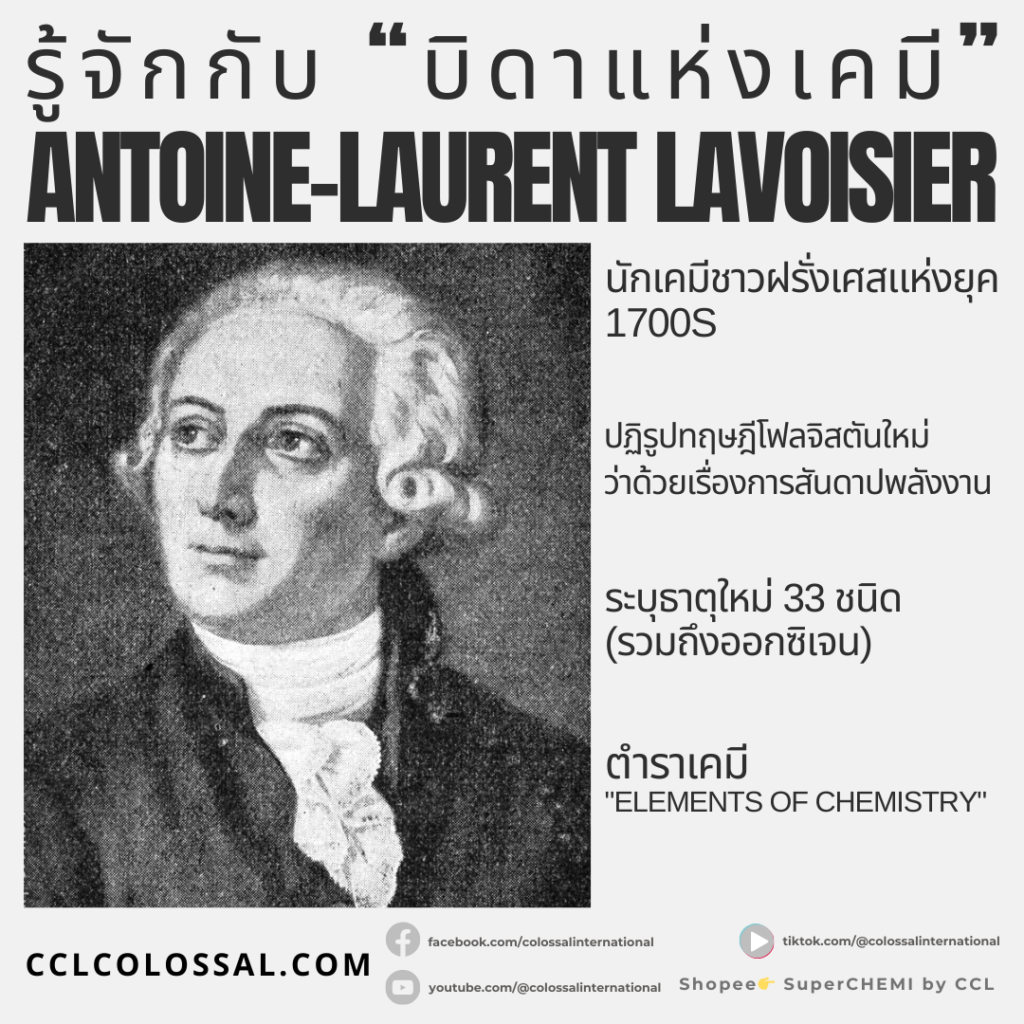
The Father of Chemistry: Antoine-Laurent Lavoisier
When it comes to the vast and ever-evolving field of chemistry, one name stands out as the “father”: Antoine-Laurent Lavoisier. This French scientist, who lived in the 1700s, completely revolutionized the way we understand and practice chemistry, earning him his prestigious nickname.
But what exactly did Lavoisier do to deserve such a title? Let’s take a closer look at his groundbreaking contributions:
Throwing Phlogiston Out the Window:
Back in Lavoisier’s time, scientists believed in a mysterious substance called “phlogiston” that was responsible for burning things. Think of it as a chemical jinn that magically whooshed out of objects when they set ablaze. Lavoisier, the ultimate science party pooper, was like, “Nope, not happening.” He meticulously conducted experiments and proved that combustion actually involved a gas he helped discover and name: oxygen.
Lavoisier didn’t stop there. He also unveiled the fundamental law of conservation of mass. This fancy term basically means that in a chemical reaction, the total amount of matter stays the same, no matter how things rearrange. No matter how you mix and match atoms, you can’t create or destroy matter, just shuffle it around. ⚖️
Elemental Makeover:
Chemistry wasn’t exactly organized in the 1700s. Elements, the building blocks of everything, were kind of like a messy attic. Lavoisier cleaned things up. He identified 33 actual elements (including oxygen, of course!), kicked out some imposters that didn’t belong, and even helped create a standardized system for naming them.
Chemistry Textbook for the Ages:
Remember that attic analogy? Well, Lavoisier wrote the instruction manual for tidying it all up. He co-authored the book “Elements of Chemistry,” which became the go-to guide for chemists for decades. It was like the chemistry bible, spreading Lavoisier’s revolutionary ideas far and wide.
Address
731/38-43 Ratchadapisek Rd. Bangpongpang Yannawa Bangkok 10120
Office Hours
Monday–Friday: 8:00AM–5:00PM
